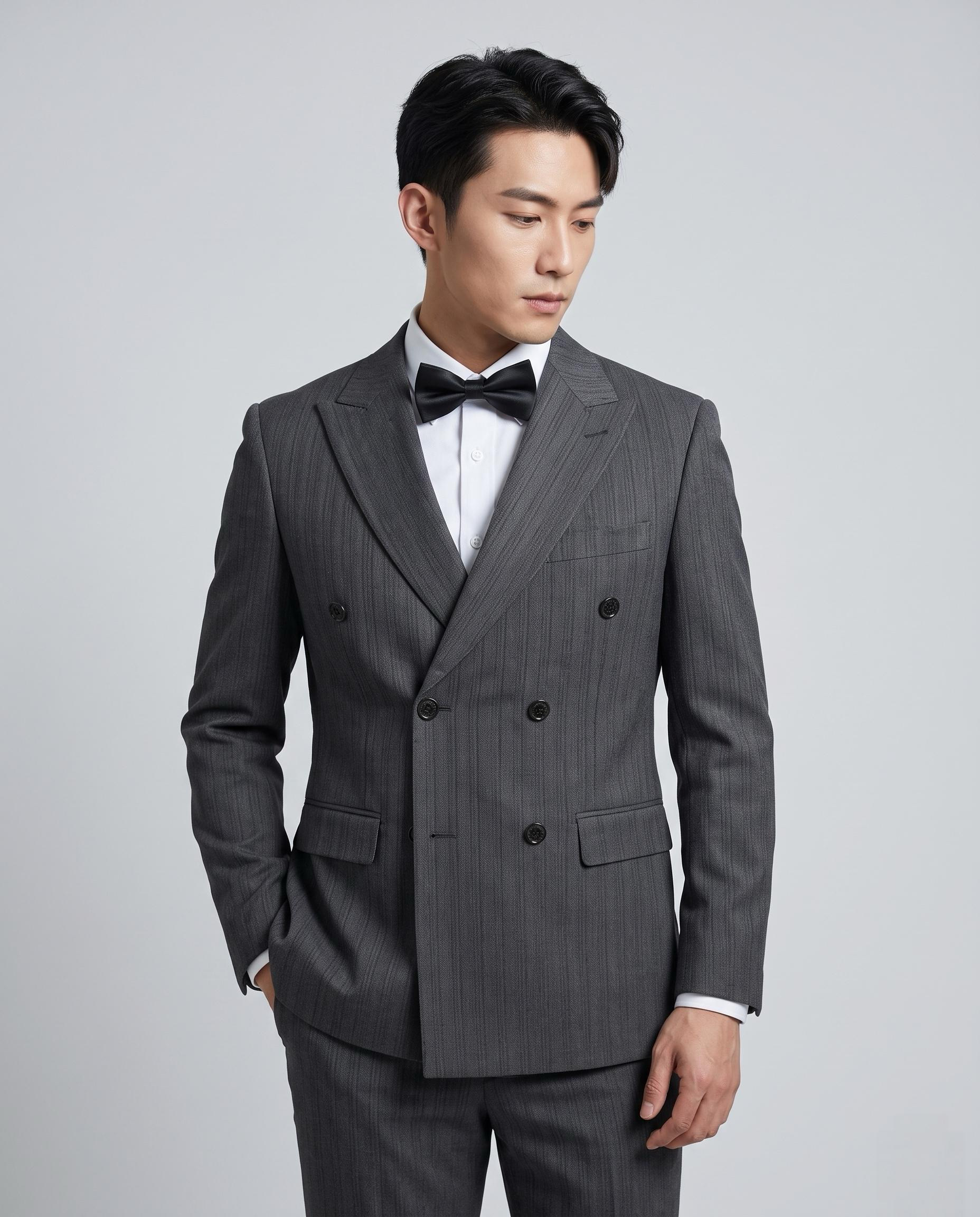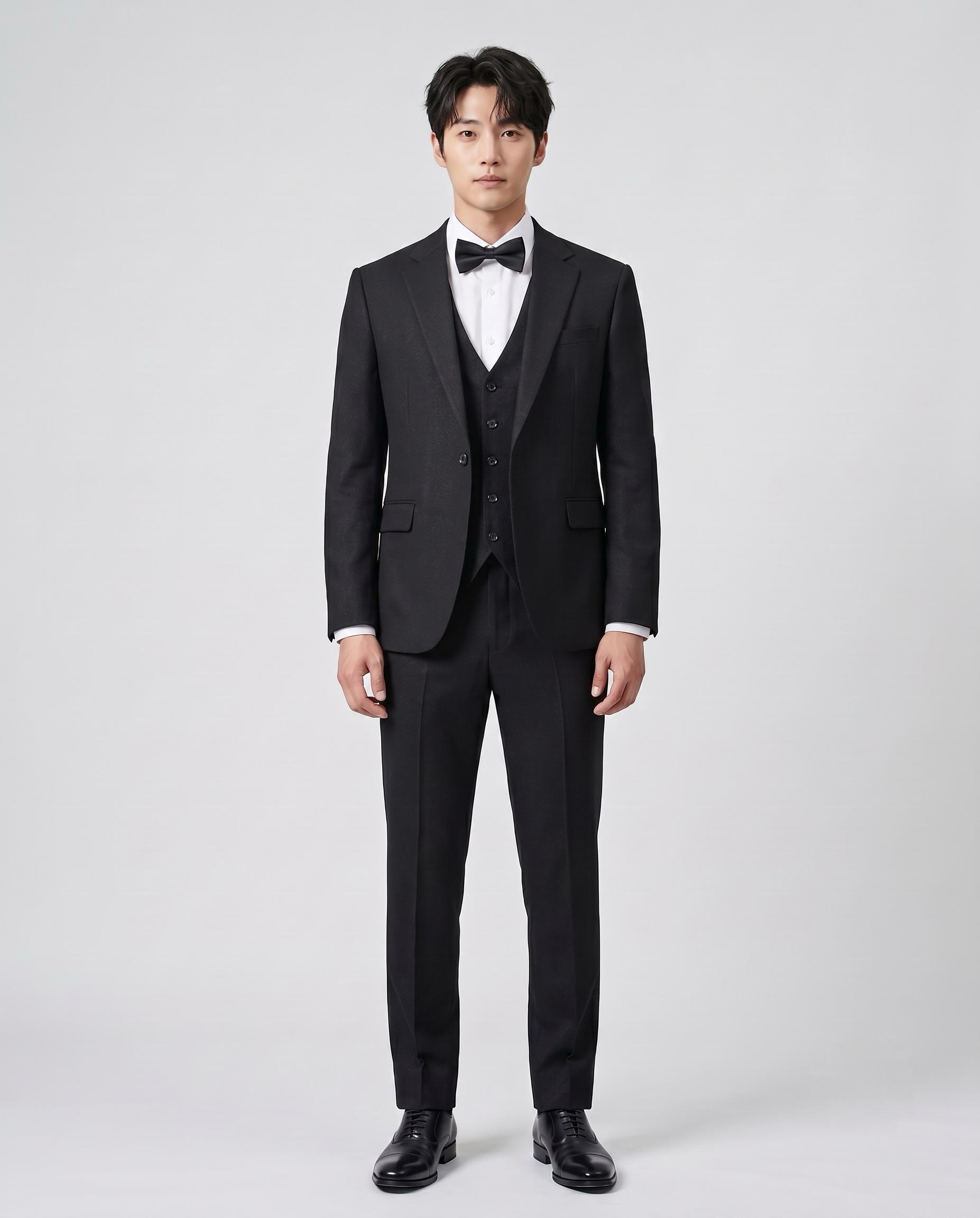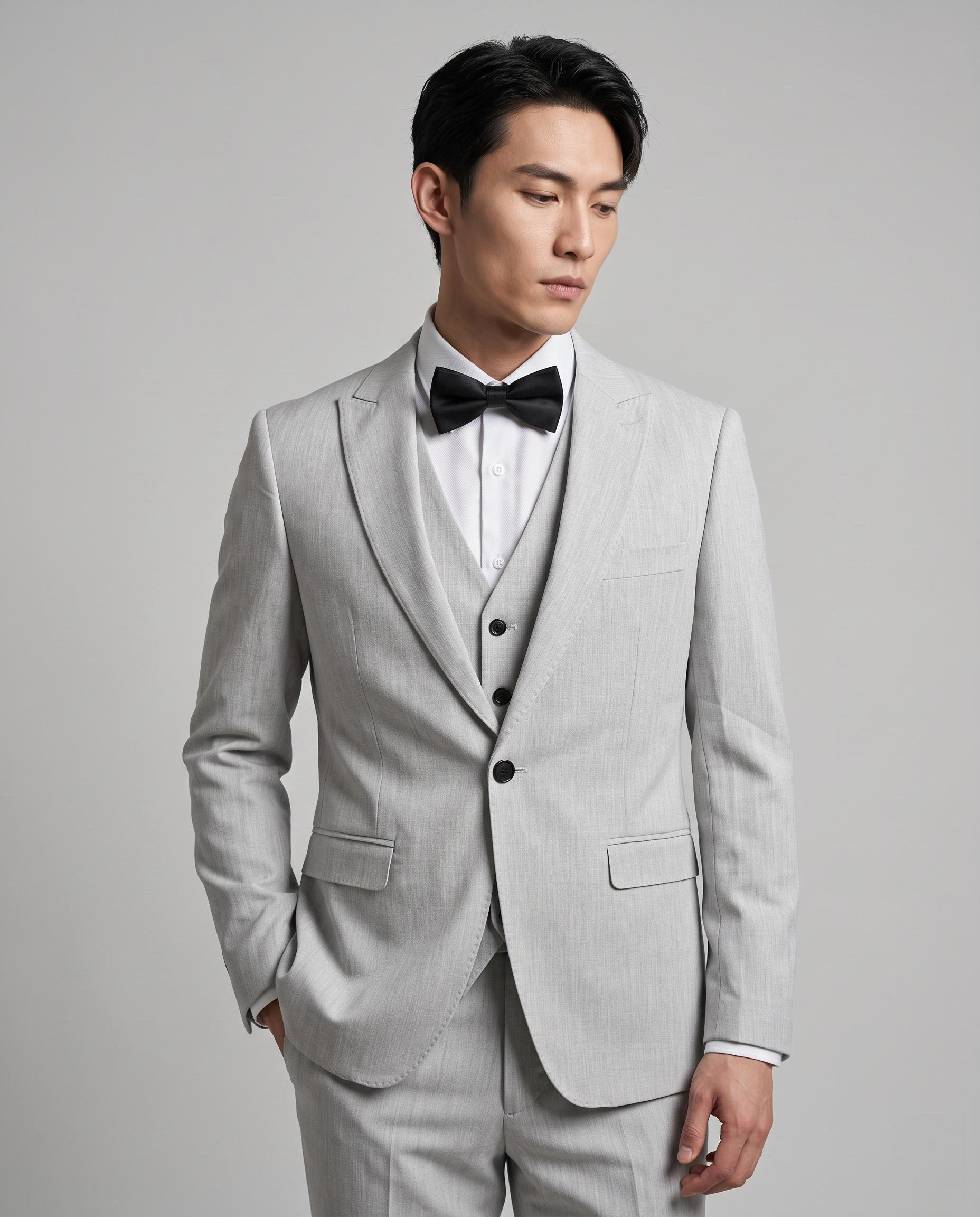
Quick answer
A slim fit suit is cut closer through the chest, waist and sleeves than a regular fit, with a trimmer trouser leg. The shoulder seam should sit at the edge of your shoulder, the jacket should close without pulling, and you should move comfortably. Fit varies by brand, so try before you buy.
Key takeaways
- ✓Check the shoulder seam first; it is the hardest part to alter.
- ✓The jacket should close without pulling across the chest.
- ✓Every brand cuts slim fit a little differently.
- ✓If you are between sizes, try both rather than guessing.
Walk into any suit shop in Singapore and you'll notice that most suits are labelled 'slim fit'. It's the dominant cut in modern menswear, and for good reason. But slim fit means different things to different brands, and knowing what to look for will save you a lot of frustration.
What Is Slim Fit?
A slim fit suit is cut closer to the body than a classic or regular fit. It typically features a narrower shoulder, a more tapered waist, and a shorter jacket length. The trousers are also cut slimmer through the thigh and have a narrower leg opening.
The result is a cleaner, more modern silhouette that photographs well and looks sharp without appearing costume-like. For most men in Singapore, slim fit is the most flattering cut.
Slim Fit vs Regular Fit: Which Is Right for You?
Choose slim fit if:
- -You have a lean to average build
- -You want a modern, tailored look
- -You'll be wearing the suit for events and occasions (not all-day office wear)
- -You're comfortable with a closer-fitting silhouette
Consider sizing up if:
- -You have a broader chest or wider shoulders
- -You find standard slim fit restrictive around the chest
- -You prefer more freedom of movement
- -You'll be wearing the suit for extended periods
Why Different Brands Fit Differently
This is one of the most important things to understand when shopping for ready-to-wear suits in Singapore. Two brands may both label their suits 'slim fit', but the cut can vary significantly in the shoulders, chest suppression, jacket length, and trouser rise.
| Slim fit | Regular fit | |
|---|---|---|
| Chest and waist | Close to the body | More room |
| Trouser leg | Tapered | Straighter |
| Movement | Slightly closer fitting | More relaxed |
| Best for | Slimmer or athletic builds | Broader builds or comfort first |
This is precisely why Suit Archive carries multiple brands, so you can compare how different cuts feel on your body, rather than guessing from a size chart alone.
The Key Measurements to Know
- -Chest: Measure around the fullest part of your chest. This is your primary size guide for the jacket.
- -Shoulder: The jacket shoulder seam should sit exactly at the edge of your shoulder. This is the hardest thing to alter.
- -Waist: You should be able to button the jacket comfortably with one fist inside.
- -Trouser waist and seat: The trousers should sit at your natural waist with no pulling across the seat.
What Is a Slim Fit Suit?
A slim fit suit is cut closer to the body than a classic fit. The chest and waist are narrower, the sleeves and trouser legs are slimmer, and the jacket is usually a little shorter. It follows your shape instead of hanging off it. Most of the brands at Suit Archive are slim fit.
| Slim fit | Regular fit | |
|---|---|---|
| Chest and waist | Closer to the body | More room |
| Trouser leg | Tapered | Straighter |
| Jacket length | Slightly shorter | Longer |
| Best for | Average and lean builds | Broader builds and comfort |
| Movement | Good if sized correctly | Roomier |
How to Find a Slim Fit Suit That Works for You
- -Start with the shoulders. The seam should end where your arm begins. This cannot be altered easily, so get it right first.
- -Button the jacket. It should close without pulling into an X shape at the button.
- -Check you can raise your arms and sit down comfortably.
- -Look at the trouser leg. Slim should taper, not cling at the thigh.
- -Try two sizes. If one pulls and the next hangs loose, you may need a different cut or separates in different sizes.
Slim, Tailored, Skinny: Are They the Same?
Shops use these words loosely, which causes confusion. In practice, they describe a scale of how closely the garment follows your body.
| Term | What it means | Who it suits |
|---|---|---|
| Classic or regular fit | Roomy through the chest, waist and legs | Anyone who wants maximum comfort or has a broader build |
| Tailored or modern fit | Trimmed at the waist, but with room to move | Most builds; a good middle ground |
| Slim fit | Closer through the body, tapered sleeve and leg | Lean and average builds |
| Skinny or extra slim | Very close, often with a short jacket | Very slim builds; risky for most people |
Most men do best in the middle of this scale. If you are choosing a first suit, slim fit with a little room is a safe target. Very tight cuts tend to look dated sooner and are less comfortable in Singapore's heat.
The Six Fit Points of a Slim Fit Suit
1. Shoulders
The shoulder seam should end exactly where your arm starts to curve downwards. If it overhangs, the jacket is too big. If the sleeve pulls and the shoulder dimples, it is too small. Shoulders are the hardest part of a jacket to alter, so they decide the size.
2. Chest
With the jacket buttoned, there should be no X-shaped pull at the button. You should be able to slide a flat hand between your chest and the jacket, but not much more. If the jacket gapes at the lapel, it is too big.
3. Sleeves
Sleeves should end at the wrist bone, showing about a centimetre of shirt cuff. A slim sleeve should not bunch at the elbow when you bend your arm.
4. Waist and jacket length
The jacket should taper gently at the waist and cover the seat of your trousers. A slim jacket is shorter than a classic one, but if it rides up when you lift your arms, it is too short for your torso.
5. Trousers
Slim trousers taper from the thigh to the ankle. You should be able to sit down without the fabric straining at the thigh, and the hem should rest on the top of your shoe with a slight break.
6. Waistcoat
In a 3-piece suit, the waistcoat should lie flat against your stomach without gaping, and the bottom edge should cover your trouser waistband. It does not need to be loose, but you should be able to breathe and sit comfortably.
Slim Fit for Different Body Types
| Build | What to try | Watch for |
|---|---|---|
| Lean | Your usual size, and a waistcoat for added structure | A jacket that looks too big across the shoulders |
| Average | Slim fit sized to the shoulders | Trouser thighs that feel tight when you sit |
| Athletic | Size up through the chest, keep the shoulders fitted | Pulling across the back and upper arm |
| Broader or heavier | Tailored fit instead of extra slim; mix sizes between jacket and trousers | Strain at the button and gaping at the lapel |
Sizing at Suit Archive
Suit Archive uses Asian sizing from 48 to 60, and most of the brands we carry are slim fit. Because jackets, waistcoats and trousers are sold separately as well as in the $178 set, your jacket and trouser sizes do not have to match. Many men take a larger jacket for the chest and a smaller trouser for the waist. Try on at least two sizes, because brands cut slightly differently.
Typical Alterations on a Slim Fit Suit
- -Trouser hem: the most common adjustment, and a quick one.
- -Sleeve length: usually shortened slightly if the jacket is otherwise right.
- -Waist suppression on the jacket: possible, but only a small amount.
- -Shoulders: avoid relying on alteration; choose the size where the shoulder fits.
If the suit needs more than a couple of these, try a different size or cut instead.
Staying Comfortable in a Slim Fit in Singapore
Closer cuts mean less air moves around you, which can feel warm in Singapore's humidity. Choose a lighter colour for daytime, wear a thin cotton shirt, and remember that a 3-piece suit lets you take the jacket off and still look dressed. Allow enough room at the chest and waist that the suit is comfortable when you sit for several hours at a dinner.
When to Choose Something Other Than Slim
If you carry more weight around the middle, have a very athletic build, or prioritise comfort over a sharp line, a slim cut can feel restrictive. Sizing up the jacket while keeping the shoulders fitted often works better than forcing a smaller size. Because jackets and trousers are sold separately at $98 and $48, you can also pair different sizes if your chest and waist do not match.
Slim fit is a cut, not a size. Try a few on in the studio and we will help you find the one that fits your shoulders first.
The Best Way to Find Your Fit in Singapore
Come to our studio. It really is that simple. At Suit Archive, we carry a curated selection of suit brands, and our team can help you compare cuts and find the brand and size that works for your body. Studio visits are by appointment: book online or WhatsApp us at (65) 8979 1210.
Our studio is at 12 Lorong Bakar Batu #06-07, Singapore 348745.
Try before you buy. Book a studio appointment at Suit Archive and try on multiple brands to find your perfect fit.
Frequently asked questions
What is the difference between slim fit and regular fit?
Slim fit follows the body more closely through the chest, waist and trouser leg. Regular fit has more room and a straighter cut.
Should I size up in a slim fit suit?
If you carry more width in the chest or shoulders, sizing up can be more comfortable. The reliable answer is to try both sizes on.
Are Suit Archive suits slim fit?
Most of our brands are slim fit, on Asian sizing from 48 to 60, but each cuts a little differently, which is why we recommend a fitting.
What is a slim fit suit?
A slim fit suit is cut closer to the body than a classic fit, with a narrower chest and waist, slimmer sleeves and tapered trousers.
How do I find a slim fit suit that fits me?
Check the shoulders first, then see that the jacket closes without pulling, you can move comfortably, and the trousers taper without clinging.
Is slim fit good for bigger builds?
Not always. Size up for comfort while keeping the shoulders fitted, or mix jacket and trouser sizes, since they are sold separately.